The Grief Curve: A Psychological Process in Professional Transitions
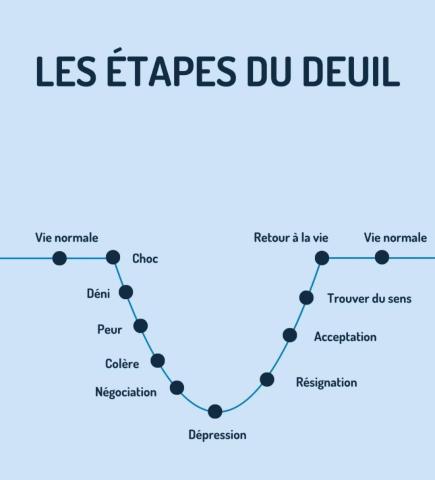
The grief curve, as described by Elisabeth Kübler-Ross, is a universal psychological process that extends beyond the loss of a loved one. It applies to any significant transition, including in the professional world. When faced with a shock, an individual goes through several stages: denial, anger, bargaining, depression, and finally, acceptance. These stages are natural, but when not properly supported, they can hinder motivation, performance, and the well-being of employees.
Throughout a career, emotional shocks are numerous: a layoff, a restructuring, a promotion, a job change, internal conflicts, or even retirement. Each of these events can deeply affect an employee, undermining their confidence and impacting their effectiveness. A laid-off employee may experience a loss of professional identity. A newly promoted person might doubt their abilities. A future retiree may struggle with closing that chapter. These transitions, while normal, are often stressful and require tailored support to be navigated smoothly.
During these crucial moments, structured support can help transform challenges into opportunities. An employee who is supported during a job change will settle in more quickly and gain confidence. A worker preparing for retirement will experience this transition with peace of mind and will be able to value their experience by passing it on. An employee facing a restructuring can regain confidence and reinvent themselves professionally. Support is not just about solving an immediate issue—it fosters quicker adaptation, strengthens resilience, and preserves team motivation.
For a company, supporting employees during these key moments is not just an act of kindness; it is a genuine talent management strategy. Organizations that integrate this type of support into their culture reduce stress, limit turnover, and enhance their employer brand. They create an environment where change is not seen as an obstacle, but as an opportunity for development. An employee who feels supported is more engaged, more productive, and more loyal to the company.
Providing support to employees, especially during professional transitions, is also a way of showing recognition. An employee who has dedicated years to a company deserves support in preparing for retirement. A colleague going through a reorganization needs a framework to regain balance. Investing in support means investing in people and ensuring a smooth and constructive transition for everyone.
Periods of change are inevitable, but they should not be endured. By anticipating them and offering appropriate support, companies can turn these challenges into growth and success opportunities. An employee who is supported is an employee who moves forward, reinvents themselves, and fully contributes to the company's dynamics.